When the Sky Picks the Winner: Five Games the Weather Decided
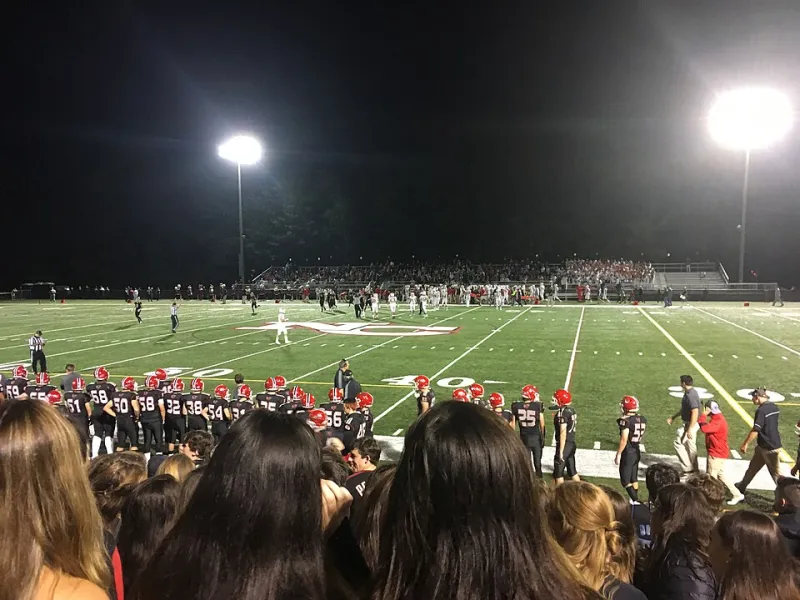
Photo: Redditaddict69, CC BY-SA 4.0, via Wikimedia Commons
Coaches spend all week scripting the perfect game plan. Then Sunday morning arrives, the wind shifts out of the northwest at 30 miles per hour, and the script goes in the shredder.
Weather is the great equalizer in American sports — the one variable no amount of salary cap management or recruiting ranking can control. Sometimes it just makes things ugly. Sometimes it outright picks the winner. These five games are the latter.
1. The 1967 NFL Championship — The Ice Bowl
Green Bay, December 31, 1967. Kickoff temperature: minus 13 Fahrenheit, with wind chills around minus 48. The turf heater at Lambeau Field failed — some say it was sabotaged by coach Vince Lombardi, and honestly, the man wasn't above it.
The meteorology is simple: an arctic high-pressure system parked over Wisconsin turned the stadium into a meat locker. The football became essentially a brick. Officials' whistles froze mid-game, which is why you'll see referees using hand signals for penalties on the film.
The strategy mattered more than the conditions. Dallas's offense kept trying to drop back and pass into teeth-chattering cold, while Green Bay leaned on short runs and Bart Starr's quick throws. It set up the most famous weather-affected decision in NFL history: with 13 seconds left, trailing 17-14, Lombardi rejected a tie-securing field goal and called a quarterback sneak. Starr dove over Bart Jurgensen's goal line behind Jerry Kramer's block. Cold favors the team that can run the ball and wants to end the game quickly — Lombardi understood that better than anyone.
2. The Fog Bowl — Bears vs. Eagles, 1988
Chicago, December 1988. A dense radiation fog — formed when moist air cools rapidly over land overnight — rolled into Soldier Field and reduced visibility to about 15 yards.
Here's what makes this one fascinating: the fog didn't affect both teams equally. Philadelphia's offense under Buddy Ryan's pass-heavy attack needed to see downfield. Chicago's defense didn't need to see — it needed to hit people. Mike Ditka's Bears could smash-run and let the fog hide everything else. The Eagles moved the ball between the 20s all day but couldn't complete anything deep because, quite literally, nobody could see the ball. Final: Bears 20, Eagles 12. Buddy Ryan spent years complaining about it. The fog never apologized.
3. The Wind-Blown Missed Kicks — 2013, Vikings vs. Ravens
A December blizzard in Baltimore turned a mundane late-season game into a kicking nightmare. Wind gusts over 40 mph made field goals a coin flip — six missed kicks and a missed extra point piled up in the fourth quarter alone.
The strategic failure belonged to both coaching staffs, who kept sending kickers out as if it were a normal day. The teams combined for five touchdowns in the final two minutes, with the Vikings briefly taking the lead before Joe Flacco found Dennis Pitta. But the real story was special teams: in gusty conditions, kickers needed their coaches to account for wind on every attempt, and repeatedly, the attempts came anyway. Baltimore escaped 29-26. The wind went 1-0 against everyone's leg.
4. The Heat Game — 2015 US Open, or Any Atlanta September
Less famous but more insidious: heat doesn't produce highlight reels, it produces collapses. Tennis's 2014 Australian Open and multiple US Opens saw players retire mid-match from heat illness, and college football's early-season games in the South are a different sport entirely in September humidity.
The meteorology: wet-bulb temperature — the combination of heat and humidity that determines whether your body can cool itself by sweating. When the wet-bulb climbs past the mid-80s Fahrenheit, athletic performance falls off a cliff. Teams that rotate linemen deeply and control tempo win these games. Teams that don't, faint in the fourth quarter. Ask anyone who's watched an SEC opener at noon in Tuscaloosa.
5. Snow Football, Everywhere, Always — But Especially the 1982 "Snowplow Game"
Patriots vs. Dolphins, Foxboro, December 1982. Zero points through three quarters in a driving snowstorm. Then Patriots coach Ron Meyer made the single most weather-dependent decision in NFL history: he sent a prison tractor with a snowplow blade onto the field to clear a patch for kicker John Smith. Field goal. 3-0. Final.
Dolphins coach Don Shula was apoplectic, and he had a point — the snow would have made a kick nearly impossible on an uncleared surface. The league later banned snowplows from clearing kicking areas. The meteorology is trivial; the strategy is everything. Weather games reward whoever adapts first, and Meyer adapted by, well, cheating-adjacent creativity.
The Common Thread
In every case, the winner wasn't the team that fought the weather. It was the team that accepted it fastest. The Ice Bowl Packers ran the ball. The Fog Bowl Bears hit people. The best weather teams treat the forecast as a co-author of the game plan — and the losing teams keep trying to play the game they drew up on Wednesday, in a climate-controlled room, for a game that no longer exists.