The Five-Star Fallacy: Rebuilding a Life After the Recruiting Rankings Miss

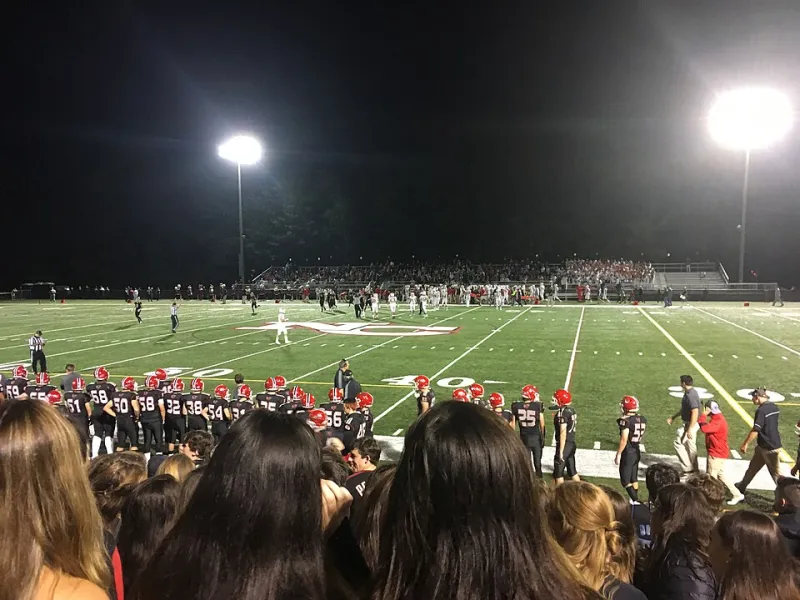
Photo: John Phelan, CC BY-SA 3.0, via Wikimedia Commons
The recruiting profile is still out there, preserved on old message boards like a digital fossil: the five-star linebacker from Georgia, ranked the No. 14 player in the entire national class of 2011. Six-foot-three, 225 pounds, runs a 4.6. The evaluation was breathless. Every major program offered. The prediction, stated as fact by adults who got paid to make predictions, was that he'd be a first-round NFL draft pick.
A decade later, he was selling insurance in Atlanta and coaching youth football on Saturdays. He asked us not to use his name — "I've made peace with it," he said, "but I don't need the internet relitigating my life."
His story is more common than the recruiting industry wants anyone to admit.
The Math Nobody Quotes
Here's the uncomfortable statistic buried in every study of recruiting rankings: roughly one-third of five-star recruits never become even a regular starter at the college level, and only a small fraction ever hear their names in an NFL draft. The services aren't fraudulent, exactly — the top of the rankings does produce pros at a higher rate than the bottom. But the certainty is fraudulent. A five-star rating is a probability dressed up as a promise.
And for the athlete, that distinction is everything. Because a promise, when it breaks, requires someone to pick up the pieces.
When the Identity Leaves Before the Sport Does
Talk to former blue-chip recruits who washed out, and a pattern emerges: the hardest part isn't the injury, the coaching change, or the transfer that didn't work out. It's the identity collapse.
"From the time I was 14, I was 'the guy,'" our Georgia linebacker said. "Every conversation with my dad, every coach who visited the house, every kid at school — it was all about where I was going. Then I'm a redshirt sophomore buried on the depth chart, and I genuinely don't know who I am if I'm not a football player. That's the part nobody prepares you for."
Sports psychologists have a term for it: athletic identity foreclosure — the premature locking-in of self-concept around a sport, often in adolescence, often pushed by well-meaning adults. The five-star system accelerates it. By 17, the kid isn't a kid with interests. He's an asset with a star rating.
The Rebuild
The stories get interesting after the fall.
Consider the former five-star basketball guard who washed out of a Power Five program and ended up, through a former teammate's connection, in commercial real estate — where he says the skills actually transferred. "Reading a room, handling rejection a hundred times a week, performing when it matters. That's recruiting visits and road games. I just do it in a suit now."
Or the once-hyped quarterback who became a graduate assistant, then a quality control analyst, and now coaches high school ball in Texas — where, he notes with a laugh, he evaluates 16-year-olds with far more humility than anyone evaluated him. "I never tell a kid he's a future star. I tell him what he does well today. Because I know what the rankings did to the kids they got wrong."
Others find their way back into competition in smaller forms: semi-pro leagues, coaching, masters competitions, even pickup culture. The common thread in the rebuild isn't bitterness. It's the slow, unglamorous work of separating "I was rated" from "I am."
What the Rankings Can't See
The recruiting industry sells clarity — that's its whole product. Five stars, four stars, a neat ordering of teenage human beings. But the evaluations measure the things that are measurable at 17: height, weight, forty time, film against inferior competition. They cannot reliably measure work ethic under adversity, injury luck, coaching fit, or the psychological weight of being anointed.
A scout once defended the system to me this way: "We're right more often than we're wrong." True, and irrelevant. The system doesn't publish its misses. It doesn't circle back to the five-star who flamed out and ask what went wrong — because the answer might implicate the anointing itself. The hype machine has no feedback loop. It just rolls to the next class.
The Clearer Truth
If there's a lesson in these second acts, it's that clarity about a young athlete's future is mostly an illusion — and the honest people in the industry know it. The coaches who last tend to talk in probabilities, not promises. The parents who navigate this best treat rankings as a nice dinner-conversation topic, not a destiny.
The former linebacker in Atlanta put it best: "The stars got me in the door everywhere. They just didn't have anything to do with what happened after. I wish somebody had told 15-year-old me that the rating was about my highlight tape, not my life."
He coaches kids now. He says he's never once told one of them they're a five-star.
"I tell them they're good," he said. "And I tell them to have a plan B that they actually like. Because I've met plan A. Plan A is a message board from 2011."
That might be the clearest scouting report in this whole business.